MOMENT of
STILLNESS
Reimagining industrial heritage through space manufacturing and regenerative architecture
Project info
Master's Design Thesis, 2024 · School of Architecture + Cities, University of Westminster · Site: Vaal Triangle, Gauteng, South Africa · Awards: WW+P Award for Creative and Inclusive City Design; Jila Golzari Award · Exhibited: Westminster MORE show, 2024 · Published: ArchiDiaries, 2026 · Tools: Rhino, Grasshopper, AutoCAD, SketchUp, Photoshop
What if a factory could clean the air instead of poisoning it?
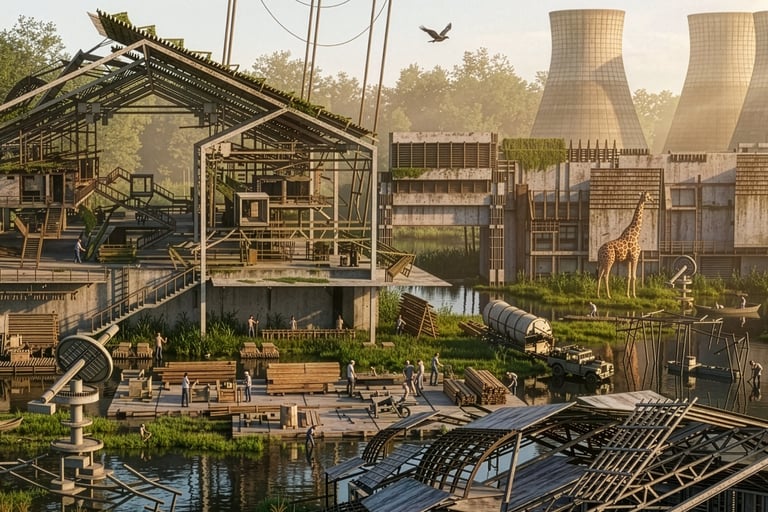
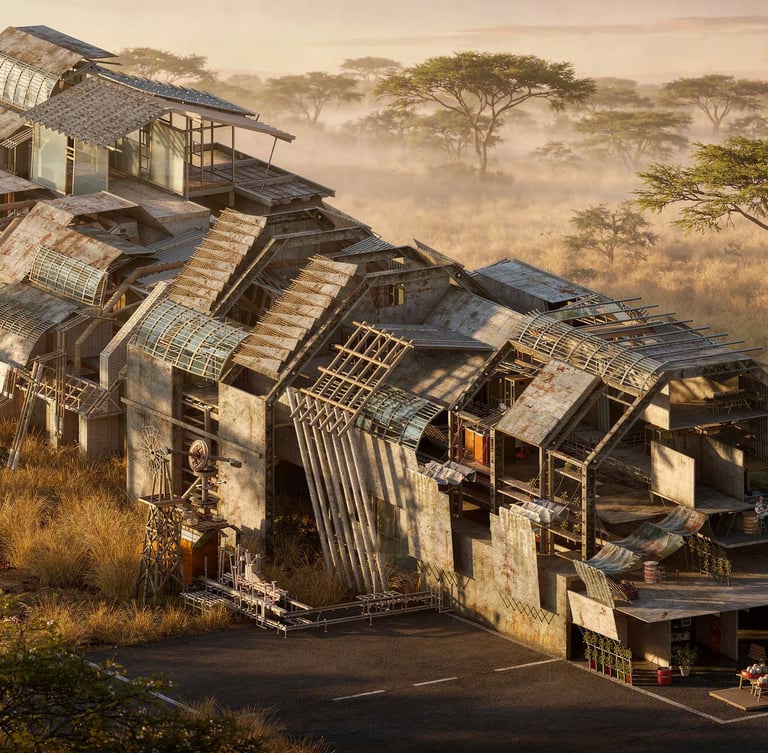
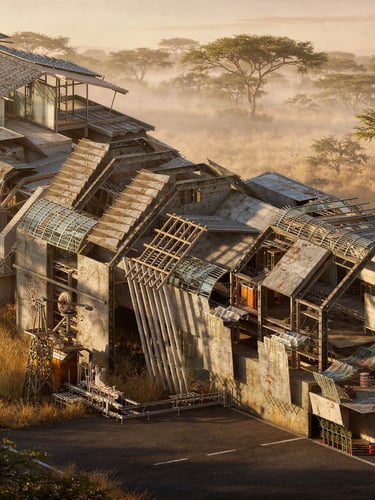
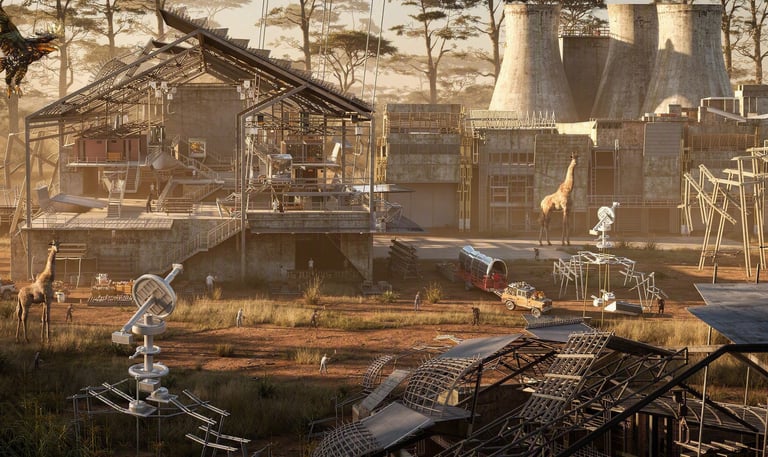
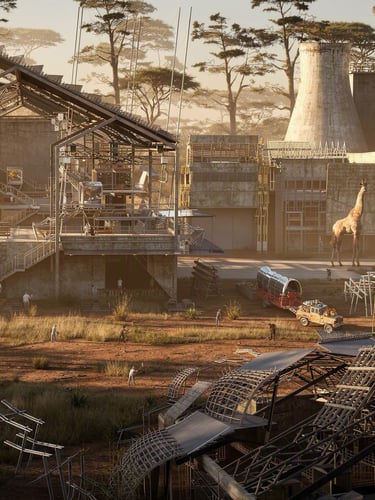
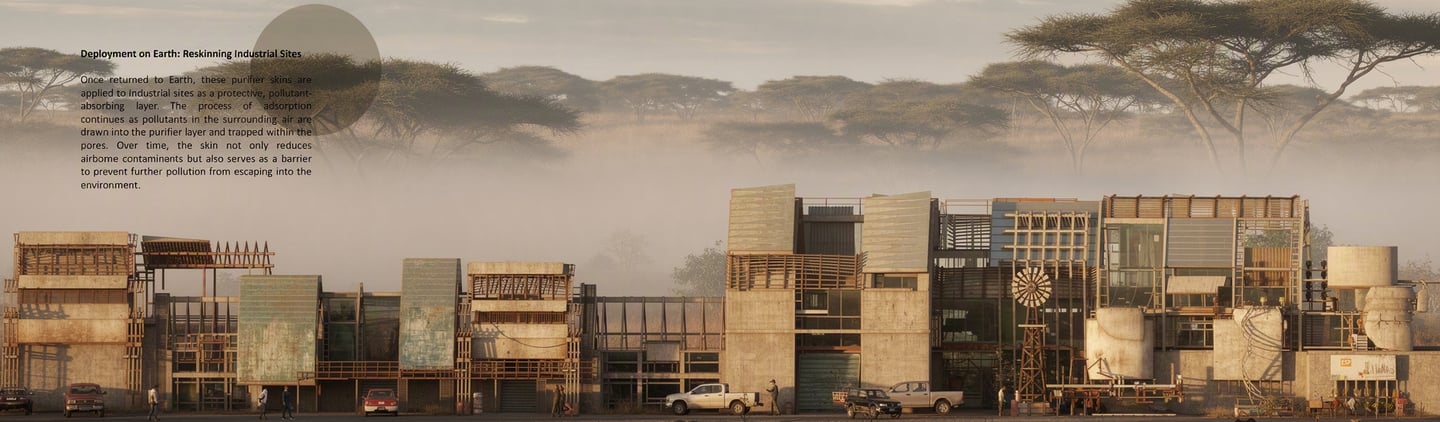
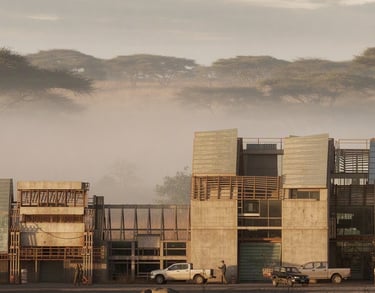
Moment of Stillness answers with a second skin: a modular façade system made from carbonised corn-cob waste — processed in low Earth orbit — that wraps the ageing industrial buildings of South Africa's Vaal Triangle and turns them from pollution sources into active air filters.
The site: a landscape holding its breath
The Vaal Triangle is one of South Africa's largest industrial regions, shaped by decades of steel, coal and petrochemical production — and one of its most polluted. The conventional responses are demolition or abandonment. Both erase jobs, identity and embodied carbon along with the pollution.
This project proposes a third response: keep the buildings, change their metabolism.
The material: a corn cob's second career
The region's agricultural belt produces corn-cob waste at scale. Carbonised, the cob becomes a porous, high-surface-area bio-composite whose phenolic compounds adsorb volatile organic compounds and particulate matter — capturing pollutants at the atomic scale as air moves through it.
The biomimicry: designed like a butterfly wing
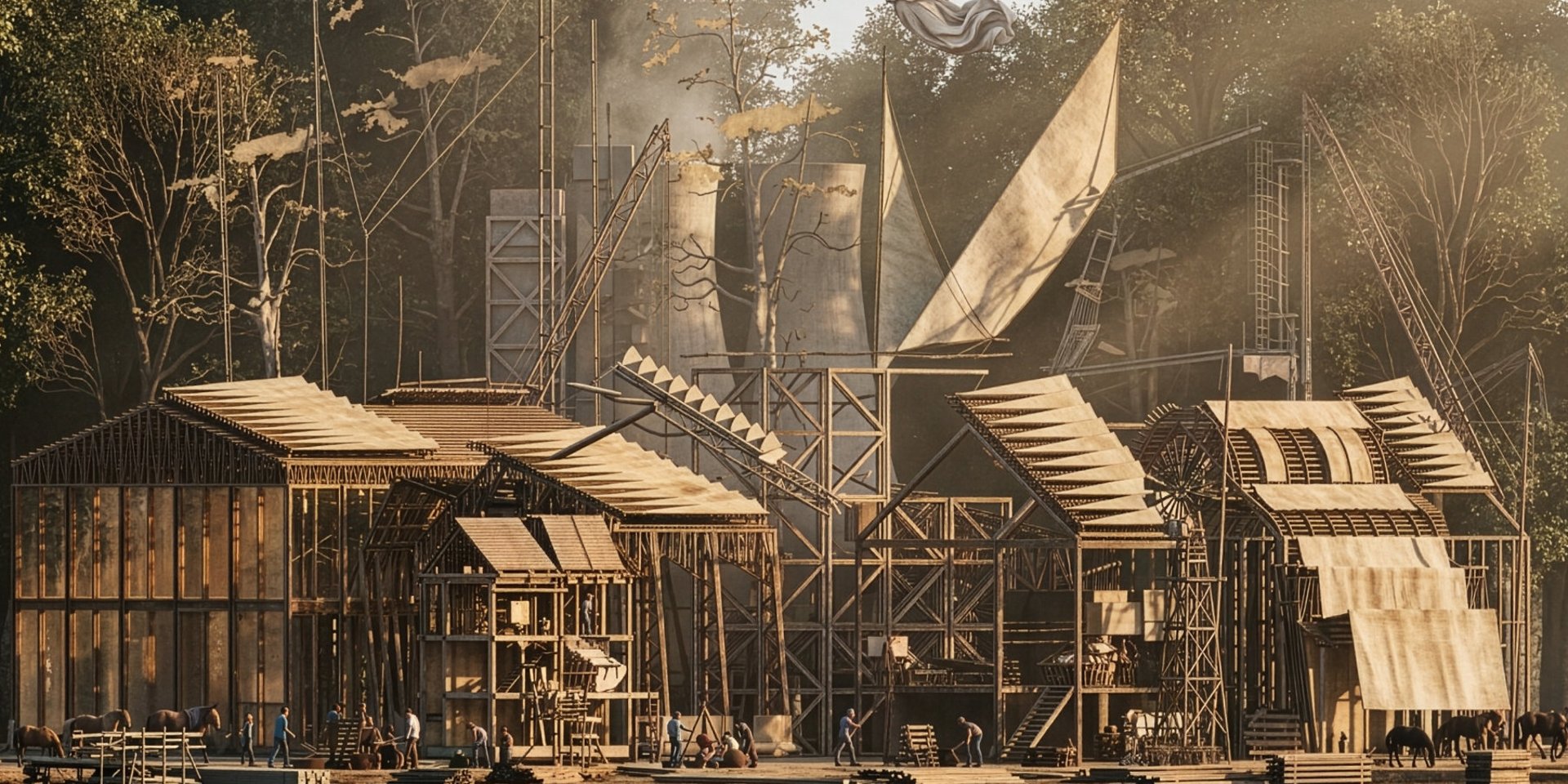
The skin's efficiency comes from its microstructure, modelled on the scales of a butterfly wing — a natural geometry that maximises surface area for a given volume. More surface, more capture. The result is a lightweight envelope that performs as both façade and ecological device.
The leap: manufactured in orbit
The thesis's most speculative move sends the material off-planet. Carbonising the bio-composite in low Earth orbit exploits vacuum and microgravity to enhance its pollutant-absorbing properties before the finished skins return to Earth. Architecture becomes part of a circular network that runs from a local farm, to orbit, to a factory wall.
The programme: buildings that host their own recovery
Rather than monuments to decline, the rewrapped factories are reprogrammed as working infrastructure: research laboratories, community workshops, education spaces, urban agriculture and housing. Local agricultural communities supply and process the material, so the economic loop is as circular as the material one — renewing both the built environment and the region's cultural identity.
Why it matters
Moment of Stillness argues that the three defining projects of this century — decarbonising industry, feeding the circular economy, and commercialising space — are not separate briefs. They are one design problem. And architecture, uniquely, can hold all three at once.